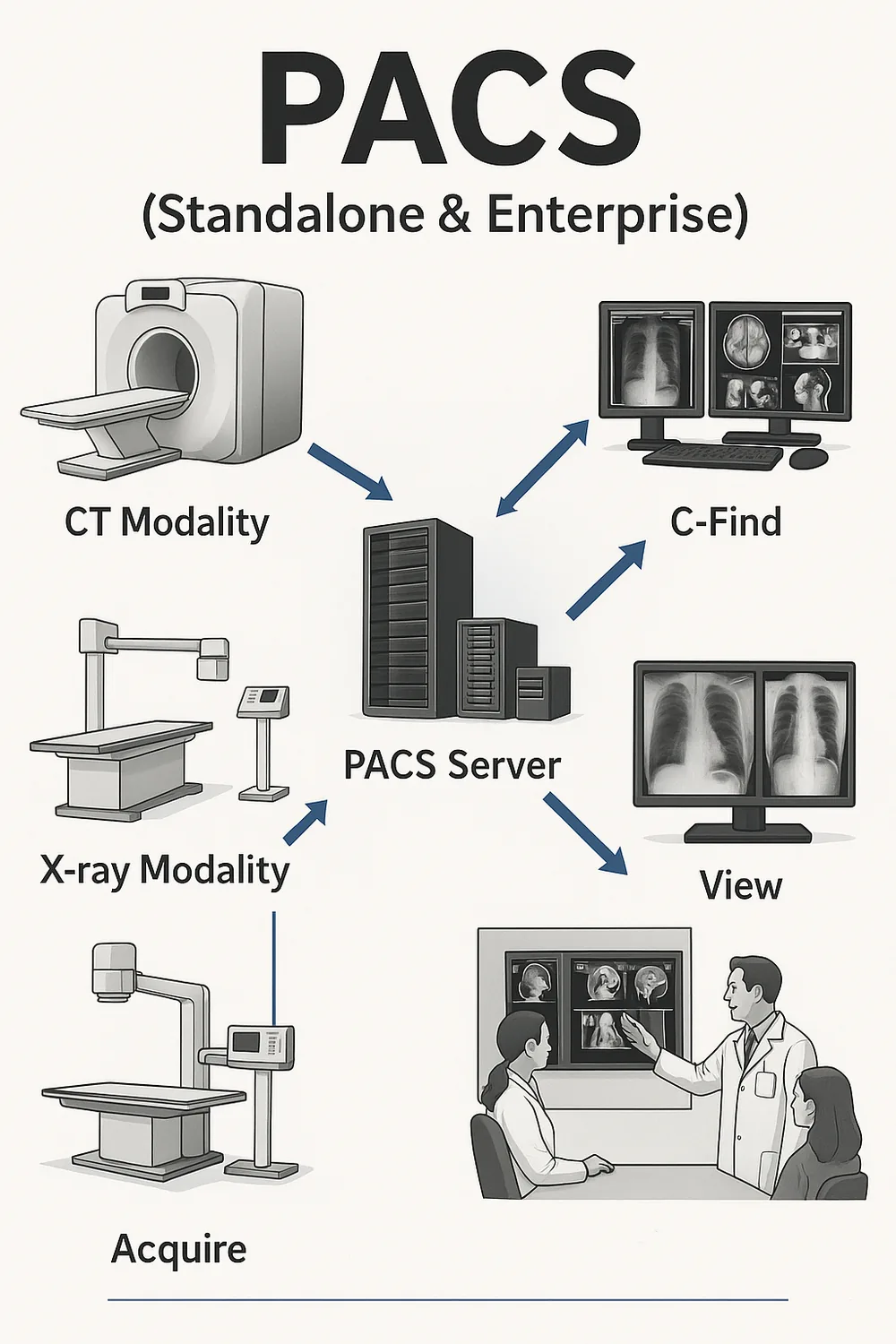
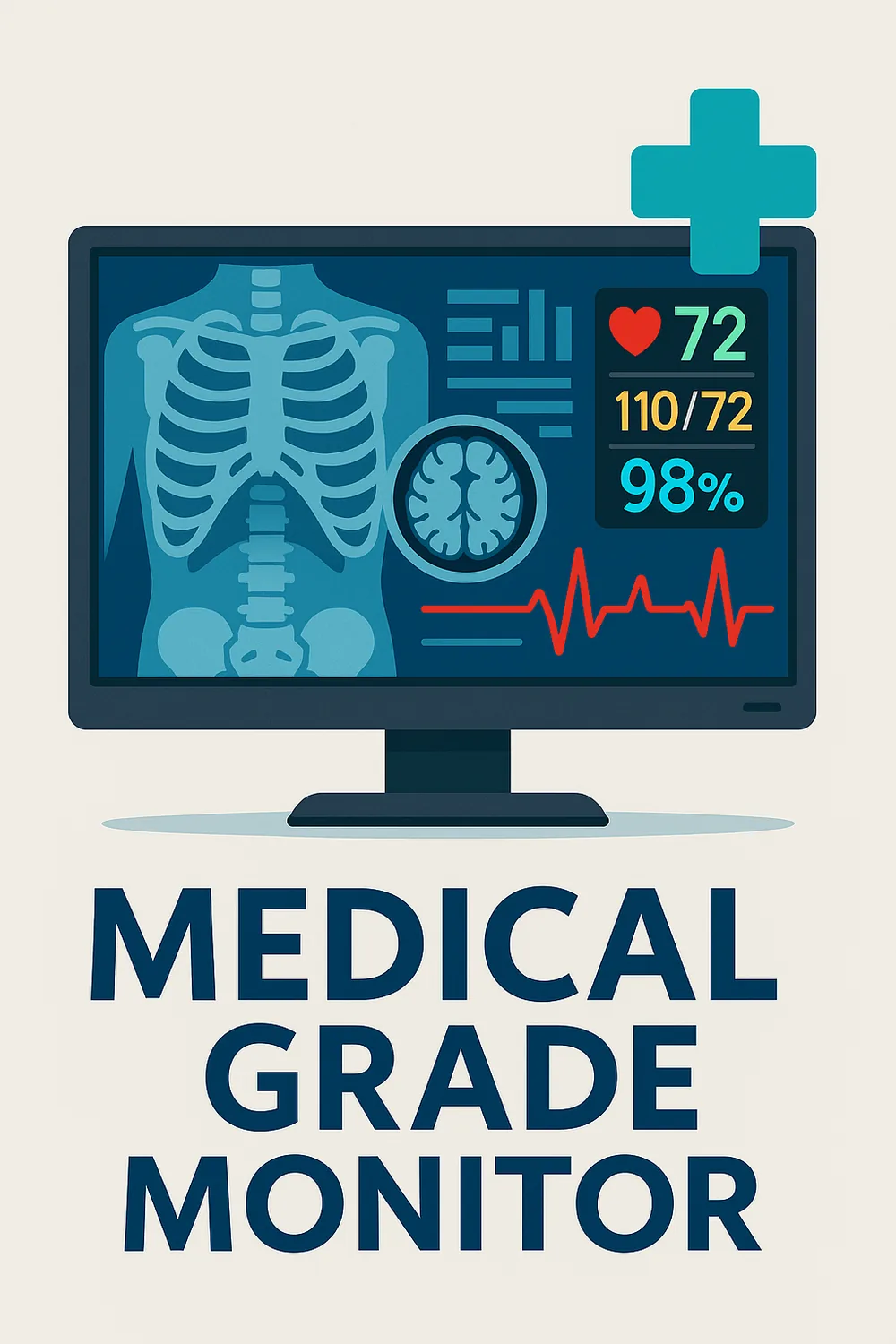
A radiologist can only report what they can see. Ordinary office monitors are designed for documents and videos, not for the fine grey-level differences in an X-ray or mammogram.
What makes a monitor “medical grade”?
- DICOM greyscale calibration (GSDF) so each grey level is shown consistently.
- Higher and stable brightness, with sensors that keep it constant as the backlight ages.
- Higher resolution — for example 2–5 megapixel displays for general radiology and higher for mammography.
- Uniformity across the whole screen.
Practical advice
- Use diagnostic monitors for primary reporting; office monitors are fine for viewing reports.
- Keep reading-room lighting low and consistent.
- Check calibration regularly.
Setting up a reporting room? Contact DigiSoft Technology for a demonstration.