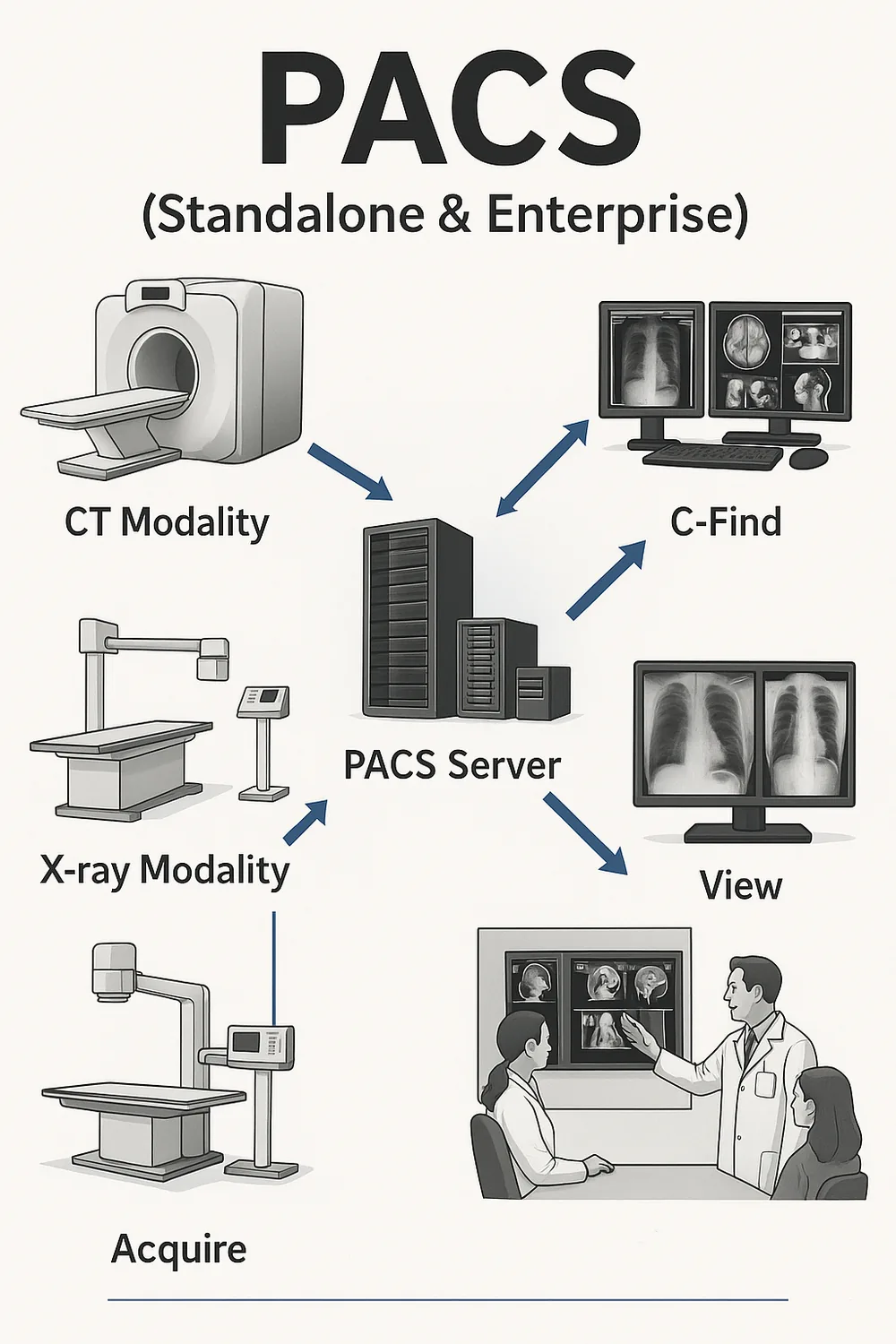
A radiology AI model is only as good as the studies it learns from. Most hospitals already have years of images and signed reports in their PACS — a valuable resource, if it is prepared carefully.
Step 1: Select the right studies
Studies are chosen per specialist (for example chest X-ray or upper limb), with a good mix of normal and abnormal cases and different machines, ages and image qualities.
Step 2: Remove patient identity
Names, IDs, dates of birth and other identifiers are removed from images and reports. The AI learns from the medical content only.
Step 3: Pair images with signed reports
Each image set is matched with its final radiologist report and converted into a consistent text format, so the model learns the department’s structure and terminology.
Step 4: Human quality review
Datasets are reviewed before training: unreadable images, wrong body parts and incomplete reports are removed. For fracture detection, radiologists draw boxes around the findings.
Step 5: Train, test, repeat
Part of the data is kept aside and never used for training, so accuracy is measured on studies the model has not seen.
Governance
Data preparation should follow the hospital’s ethics and data-protection policies, with access limited to the project team and data kept on the hospital’s own systems.
Want help turning your PACS archive into an AI-ready dataset? Contact DigiSoft Technology for a demonstration.